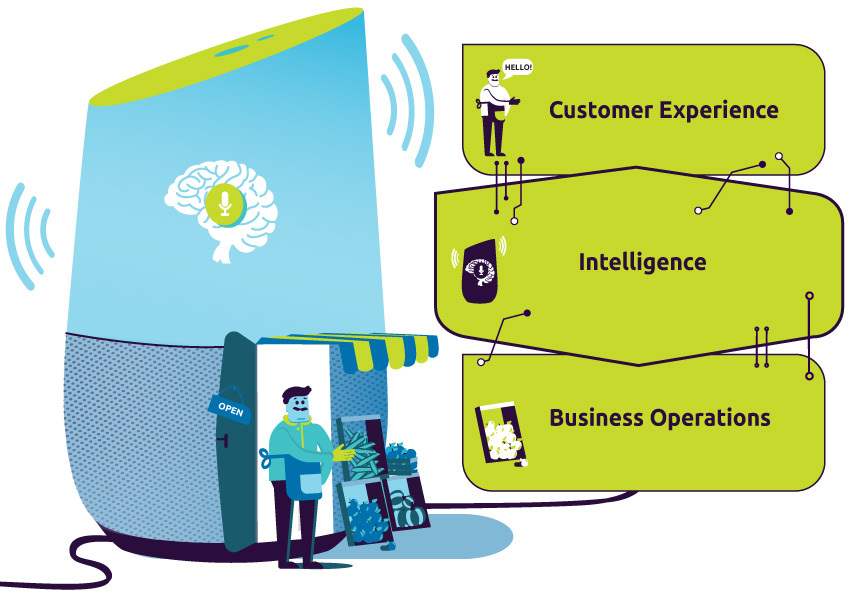
A research by Capgemini has revealed the following
Voice assistants will become a dominant mode of consumer interaction in the next three years: today, around a quarter of people say they would use a voice assistant instead of a website, however, in three years’ time, this is set to rise to 40%.
Users have adopted voice assistants for a variety of functions, with predominant usage focused on seeking information and playing music, however this has more recently extended to commerce related activities: over a third (35%) have bought products like groceries, homecare and clothes via a voice assistant.
Retailers are already making advances to launch voice shopping via partnerships with tech platforms such as Google Assistant and Amazon’s Alexa, in response to these behaviours: Wal Mart recently partnered with Google to allow customers to shop more than two million items through voice.
Voice assistants aren’t just being used for product purchases – they are becoming increasingly popular in the service sector, too, with more and more consumers using voice platforms to order food, book appointments and for bank transactions.
Although most interactions via a voice assistant take place in the home, our research suggests that conversational commerce can be used to enhance the in-store experience. Over a third of consumers would be willing to replace customer support or shop sales support with a personalised voice assistant in exchange for a faster, more convenient experience.

